BEING A TEACHER IS A DIFFICULT TASK NOWADAYS, SO I DECIDED TO FOLLOW THIS PIECE OF ADVICE BY BRUCE LEE:
Empty your mind, be formless. Shapeless, like water. If you put water into a cup, it becomes the cup. You put water into a bottle and it becomes the bottle. You put it in a teapot it becomes the teapot. Now, water can flow or it can crash. Be water, my friend.
Climate change and the melting of the permafrost are behind this strange phenomenon: the appearance of craters in Siberia. Do we still need to convince people that we have a serious problem on Planet Earth? So get down on it!! (What does this expression mean?)
And here's another interesting topic related to climate change:
Episode 200902 / 02 September 2020 >>> Could driverless cars save lives? - Language related to
'driving'. Need-to-know language: test track, control freak, swerving, liable & competent.
There are many situations in our everyday life where the only response we've got is "It is what it is" (BBC Learning English) >>> To say that we must accept the reality of a difficult situation you can say this.
Examples:
You tried your best, but you still failed the exam. It is what it is.
Me and Tan just don't like each other. It's difficult, but it is what it is.
US President Donald Trump and Michelle Obama using the same idiom: "It is what it is"
Do you know who Michelle Obama is?....
From Michelle Obama's humble Chicago upbringing to the White House: Part 1 & Part 2
Another critic situation nowadays is climate change. We have to accept it and face it as well as we can. Here are some interesting articles for you to read about the issue:
And now some exercises for my 4º ESO & 1º Bachillerato students for the preparation for the B1 & B2 exams >>>
HIGHWAY TO B2.....
USE OF ENGLISH.Multiple-choice exercise. Choose the appropriate option:
21. He will probably................... for the newspapers. (A
take his picture B having his picture taken
C have his picture taken D
had taken his picture)
22. He is certainly going to arrive home .................. (A late
B lately C
more late D latest)
23. Larry's horse ........................ eat the grass.
(A couldn't B
wouldn't C shouldn't
D mightn't)
24. Eric and Bill are having ............ trouble. (A
many B few
C a lot of D plenty)
25. Eric says to Bill, "Let's try a bit harder, .................... ?". (A will we B
shall we C do we D are we)
26. The horse was put ............... by the high fence. (A
off B over
C away D down)
27. Larry was very shocked when he found ............ on the ground. (A
him B to himself
C his self D himself)
28. I think he
.................. up.(A
needs cheer up B needs cheering up
C needs to D is needing to)
29. It's time someone................... to help him. (A is going
B goes C went D has gone)
30................. up, someone will send for an ambulance. (A Until he gets B Whether he gets C If he does get D Unless he gets)
31. No doubt he will soon .......................... .(A get his accident over B get on with his accident C
get out of his accident D get over his accident)
32. Eric and Bill are tired so they'll soon stop .................... a rest.
(A for have B for having C to have D for to have)
33. Larry.............. better choose a bigger horse next time. (A would B does C had D should)
34. Eric didn't want to miss his drink. ..................... did Bill. (A Either B Whether C Neither D No)
35. But they have to work, ........ ? (A oughtn't they B mustn't they C won't they D don't they)
36. The horse will not move even if three people ...........
it. (A had pushed
B pushing C will push D push)
37. It.............. every time the fence is too high. (A stop
B will stop C shall stop D stopping)
38. "We aren't going to move this horse,", said Eric.
"I'm afraid .................... ," replied Bill. (A not B
yes C no
D that)
39. The harder they tried...................... they got. (A the more hotter
B hotter C the hotter D hotly)
40. Larry still doesn't really know................ has happened.(A whether
B how C what D if)
Solutions to USE OF ENGLISH exercise in the previous post:
1. B 2. C 3. C 4. D 5. D 6. D 7. B
8. A 9. D 10. C 11. A 12. C 13. C 14. D 15. D 16. B 17. D 18. C 19. C 20. B
Episode 200805 / 05 August 2020 >>> Tourism trouble in Egypt - Language related to
'economic problems'. Need-to-know language: killed off, a blow, turmoil, on a mission & counting on.
It is not just climate change what our world has to face, but also a climatic emergency as things are getting worse and worse at such an incredible speed that it might be too late if we don't take action as soon as we can.
We can make a change ourselves >>> "Politics plays a big role in the advancement of economics and greatly impacts the environment, technology, and society in general, and this is why we aim to help the world make a better place starting with encouraging healthy political views and ideals. " (ChangeRoots ) Here's an interesting article for you to read: 3 Ways to Make a Difference: Changing The World With Political Awareness
Some articles for you to read about CLIMATE EMERGENCY:
And there are people who have already found some solutions to the problem. For example, here's an example of a Scottish firm who uses sea water or the case of some scientists who have provoked a snowstorm:
Episode 191127 / 27 November 2019 >>> Mapping the dead (How tech is finding lost graves): Language related to
'burial'. Need-to-know language: resting place, headstones, grave, cemetery and decay.
Who taught you the most things? Your Mum or your Dad? Or both at the same time? Are the teaching roles inside the family changing nowadays?
Well, things used to be so different. As babies or little children, we used to spend a lot of time at home with mothers and obviously we would learn from them, but nowadays mothers may be working and we may spend more time with our fathers, with our grandparents, or even at nursery schools.
In northern Europe many mothers, or fathers, may decide to stay at home and raise their children themselves and that would mean that we would go back to square one.
Anyway, children learn their languages from the people that are around them, so sometimes it's the mothers, or the fathers, or grandparents, or the nannies that take care of them! Just before they begin to speak they go through what is called THE SILENT PERIOD, when they just listen and listen without producing anything at all.
Write about how you learned to speak and to do many other things, and about the people who taught you most.
Every day you can learn something. For instance, the other day I learned about this motivational cartoon from our student in 4º ESO Susana, who used on the cover of her folder (great idea!!! Thanks!!!):
This is the right attitude to face challenges in life, especially at school.
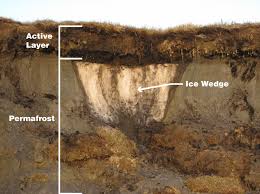
But not long ago (actually, it was yesterday), I also learned about something from our Geography and History teacher Mr Jiménez: 'permafrost' and how climate change is affecting it. This could have disastrous consequences in certain regions in the world and could even be a threat to our lives.
Episode 191023 / 23 October 2019 >>> Can VR help the memory? (Virtual therapy: helping old people remember): Language related to
'elderly people'. Need-to-know language: care home, dementia, trip down memory lane, no longer with us & disorientating.
BASKETBALL >>> Vintage NBA
Once upon a time, there was a man, probably from an outer world, who could play basketball >>>